Research Resources
Templates, datasets, software, and funding opportunities organized in one place for Penn IM residents.
Templates
Presentation and poster templates for conferences, plus writing templates for journal submissions.
Presentations and Posters
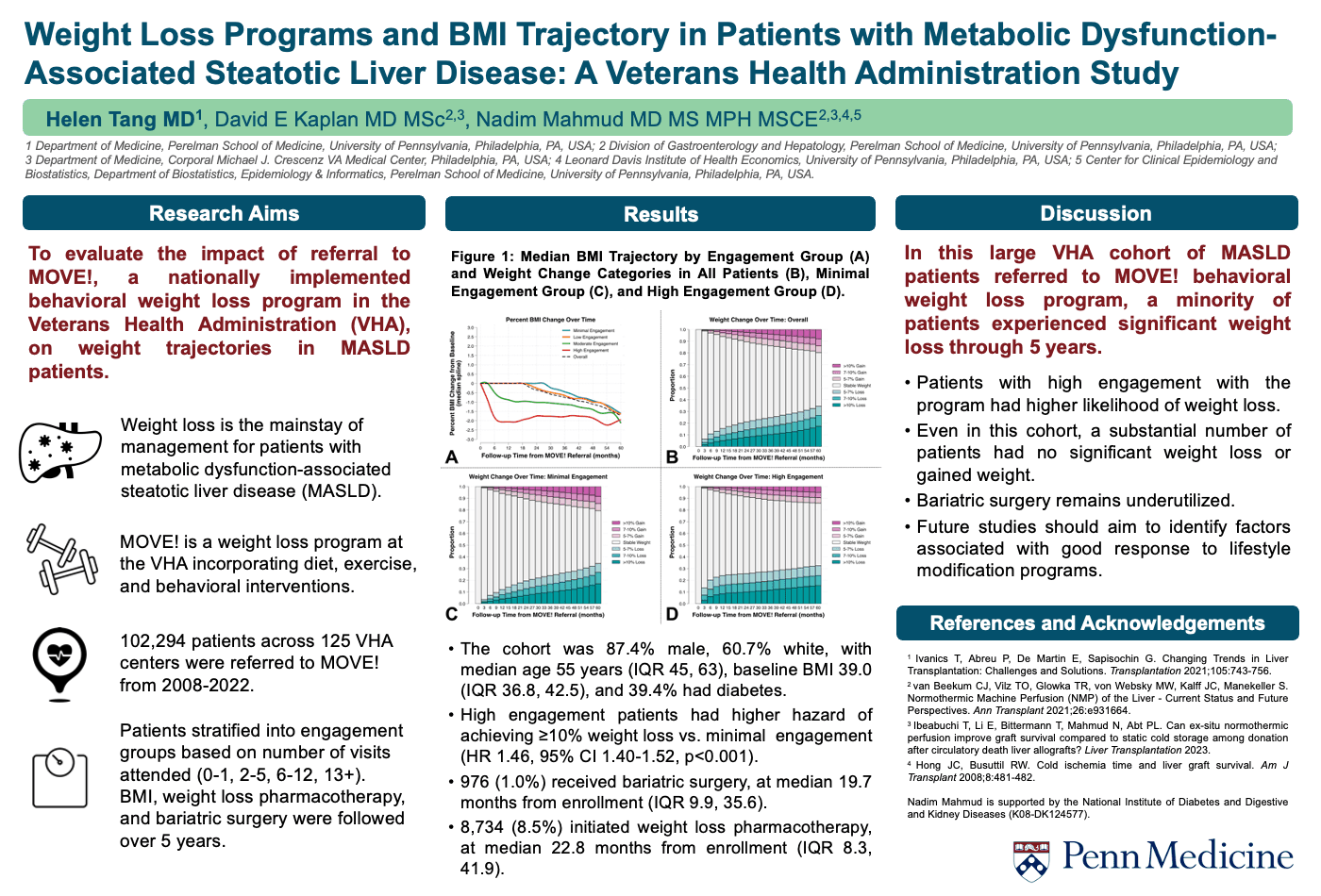
Oral Presentation Template
PowerPoint template for research talks, grand rounds, or conference presentations. Includes title, background, methods, results, and conclusion slides.
Download TemplatePoster template coming soon
Conference Poster Template
Standard academic conference poster with layout guidance and design best practices. Downloadable file coming soon.
Poster Design GuideOther Publication Templates
Cover Letter
Template and annotated examples for journal submission cover letters. Includes structure guidance and common pitfalls to avoid.
Response to Reviewers
Point-by-point response template and examples for addressing peer reviewer critiques during the revision process.
Datasets and Data Services
Click any card to expand it for strengths, limitations, step-by-step access instructions, and Penn-specific notes.
Penn Self-Service Tools
Start here for unfunded projects. These tools are available at low or no cost to Penn Medicine trainees and do not require formal data extraction requests.
Penn Structured Data Requests
For complex questions that exceed the capabilities of self-service tools. These require funding support or departmental Honest Broker resources.
National Registries
Federally maintained or large-scale registries commonly used for clinical outcomes research. Access requirements and costs vary.
Free Public Databases
Open-access datasets with minimal or no application requirements. Great starting points for residents beginning research.
Research Software
Statistical tools and citation managers with Penn-specific access information. For a detailed citation manager comparison, see the Organizing Citations curriculum article.
Statistical and Data Analysis
R / RStudio
StatisticsOpen-source statistical computing environment, the research standard for regression, survival analysis, data visualization, and bioinformatics.
Penn Access
Free to download. Penn Libraries offers R guides and tutorials for PSOM researchers.
RStudio Desktop is free. RStudio Workbench (server-based, collaborative) is available through PMACS for more complex analyses.
Access at Penn →Stata
StatisticsStatistical software widely used in clinical and health services research, with excellent support for survival analysis, panel data, and complex survey datasets like HCUP.
Penn Access
Available on Penn Libraries computers (Mac and PC) and on PMACS/HSRDC servers. Remote access available via the Penn Libraries Virtual Computer Lab (registration required). Discounted personal licenses available for students and Penn faculty/staff.
If your mentor's lab has HSRDC access, Stata is already available there. Penn Libraries also provides a STATA Libguide with tutorials and best practices.
Access at Penn →SAS
StatisticsEnterprise statistical software with strong support for administrative datasets. Required for some HCUP analyses and used widely in large-scale epidemiology studies.
Penn Access
Available on Penn Libraries computers and via PMACS Research Systems. Free SAS OnDemand for Academics access available directly from SAS for students and educators (cloud-based, no installation required). Annual SAS Educational Analytic Suite licenses also available through university software licensing.
SAS OnDemand for Academics at communities.sas.com is free for academic researchers and runs through a browser. Contact Kevin Thomas (Business & Data Analysis Librarian) at Penn Libraries with questions.
Access at Penn →Python
StatisticsVersatile programming language with powerful data science libraries (pandas, scikit-learn, matplotlib). Increasingly used for machine learning, NLP, and large-scale data analysis.
Penn Access
Free to download. Available on PMACS research servers and within the Epic COSMOS advanced analytics environment.
REDCap
Data CollectionSecure, HIPAA-eligible web application for building research databases and surveys. Free for Penn researchers and widely used for prospective data collection.
Penn Access
Free for all Penn Medicine researchers. Access via Penn Medicine REDCap with PennKey login.
Supports automated data exports to R, Stata, SAS, and SPSS. Widely accepted for IRB submissions.
Access at Penn →NVivo
Qualitative AnalysisQualitative data analysis software for coding, querying, and visualizing qualitative data from interviews, focus groups, open-ended survey responses, and documents.
Penn Access
Available on Penn Libraries computers (both Mac and PC locations). Remote access available via the Penn Libraries Virtual Computer Lab (registration required).
Register for Virtual Computer Lab access through the Penn Libraries website. Support available from the Penn Libraries Director of Research Data & Digital Scholarship. LinkedIn Learning training courses also available via Penn Libraries.
Access at Penn →Citation Managers
EndNote
Citation ManagerFull-featured desktop citation manager with seamless Word integration. Penn Libraries holds a site license, making it free for all current Penn faculty, staff, students, and UPHS-affiliated residents.
Penn Access
Free via Penn Libraries site license. Download from the Penn Libraries website with PennKey authentication.
Eligible users include UPHS hospital staff at HUP, Penn Presbyterian, and Pennsylvania Hospital. Allows up to 3 device installs with cloud sync and unlimited storage.
Access at Penn →Zotero
Citation ManagerFree, open-source citation manager with browser integration, group libraries, and plugins for Word and Google Docs. Excellent for collaborative research teams.
Penn Access
Completely free. No Penn account needed. Penn Libraries offers Zotero guides and workshops.
Mendeley
Citation ManagerElsevier's reference manager with PDF annotation, article discovery features, and Word integration. Free tier available.
Penn Access
Free to use with a personal account. No Penn-specific access required.
Penn PMACS Research Computing
PMACS (Penn Medicine Academic Computing Services) provides shared research computing infrastructure including Linux servers with SAS, Stata, R, and Python. The HSRDC (Health Systems Research Data Core) offers secure computing environments for large datasets including NIS, Medicare claims, and others. Access requires a PMACS account and appropriate IRB or DUA documentation.
PMACS Research Systems →Funding and Awards
Penn-based funding opportunities and recognition awards available to IM residents and trainees.
Samaha Resident Research Award
Penn Department of Medicine
An internal award recognizing outstanding research conducted by Internal Medicine residents at Penn. Awarded annually in recognition of scholarly contributions to clinical or translational research.
Eligibility
Current Penn IM residents with completed or in-progress research projects
Contact your program director or the DOM research office for application details and annual deadlines.
DOM Research Day Awards
Penn Department of Medicine
Competitive research presentations at the annual DOM Research Day, with awards given to top resident and fellow abstracts across categories including clinical research, basic science, and quality improvement.
Eligibility
Penn IM residents and fellows presenting original research
Watch for the abstract submission call from the residency office, typically in the fall. Presenting at Research Day is a great way to get feedback and visibility.
ITMAT Pilot Grant Program
Institute for Translational Medicine and Therapeutics (ITMAT)
Provides seed funding for early-stage translational research projects. Available to PSOM-affiliated investigators including fellows and residents with faculty sponsors.
Eligibility
PSOM investigators with a faculty mentor or sponsor
Excellent for bench-to-bedside or translational pilot work.
Learn More →LDI Health Services Research Funding
Leonard Davis Institute of Health Economics (LDI)
Supports research at the intersection of health economics, health services, and clinical medicine. LDI fellows and affiliated researchers can apply for pilot grants and access HSRDC data resources.
Eligibility
LDI-affiliated investigators and fellows; non-LDI trainees with an LDI mentor may qualify for data access
Health services researchers: this is a key resource. LDI also provides access to HSRDC servers with NIS, Medicare claims, and other large administrative datasets.
Learn More →PSOM Research Funding Opportunities
Perelman School of Medicine
PSOM's Office of the EVD for Research maintains a curated list of internal and external funding opportunities, including bridge funding, McCabe Fund awards, and trainee-specific mechanisms.
Eligibility
Varies by award; many include trainee and junior faculty categories
Check this page regularly; new opportunities are added throughout the year.
Learn More →Specialty Society Trainee Awards
Various (AHA, ACR, ASLD, ASN, CHEST, AGA, and others)
Most major subspecialty societies offer trainee research grants, abstract awards, and travel awards. These are excellent early recognition opportunities and strong additions to fellowship applications.
Eligibility
Varies by society; most require current resident or fellow status
Ask your subspecialty mentor which society awards are most relevant to your field. Applying for society grants is also good practice for future grant writing.
Tips for Finding Additional Funding
- Talk to your mentor early. Many attendings have R01 or K-award funding that can support a resident project, including salary or data access support.
- Check specialty society grants. AHA, ACR, ASLD, ASN, CHEST, AGA, and most major societies have trainee research awards with manageable application requirements.
- Think long-term. NIH K23 and K08 awards are the pathway toward becoming a clinician-scientist. Discuss these mechanisms with your mentor and the residency research office early in your training.
- Look into AHRQ and PCORI for health services and comparative effectiveness research funding opportunities.